Dreaming of a home you can lock up, leave behind, and return to with minimal hassle? On Whidbey Island, that idea can be especially appealing if you travel often, split your time between homes, or simply want an easier day-to-day routine. The key is knowing that “low-maintenance” on an island can mean something different than it does on the mainland, and the details matter. This guide will help you understand which home types best fit lock-and-leave living on Whidbey, what questions to ask, and where island-specific upkeep can still follow you. Let’s dive in.
Why lock-and-leave works on Whidbey
Whidbey Island naturally attracts buyers who want flexibility. Some are second-home buyers. Others are remote workers, downsizers, or frequent travelers who want a home base with less hands-on upkeep.
Travel logistics are part of the equation here. Washington State Ferries serves both the Mukilteo/Clinton route and the Port Townsend/Coupeville route, and WSDOT provides schedules, live status updates, and best-times-to-travel tools. If you plan to come and go often, your home choice should support that lifestyle rather than add extra maintenance stress.
Location within the island also matters. Island County identifies Langley, Freeland, Coupeville, Oak Harbor, and Clinton as the main community and business centers, with Freeland serving as the commercial center of South Whidbey and Oak Harbor as the island’s largest city. In practical terms, homes closer to town-centered areas often make lock-and-leave living simpler because services and day-to-day needs are typically closer at hand.
Best home types for low-maintenance living
Not every property that looks easy to maintain actually is. On Whidbey, the most suitable lock-and-leave options usually fall into two broad categories: community-based homes with shared maintenance and smaller detached homes with simpler systems.
Condos and townhome-style homes
Condos are often the clearest fit for lock-and-leave living because shared maintenance is built into the ownership structure. In many cases, the association handles common elements, which can reduce the number of exterior tasks that land on your to-do list.
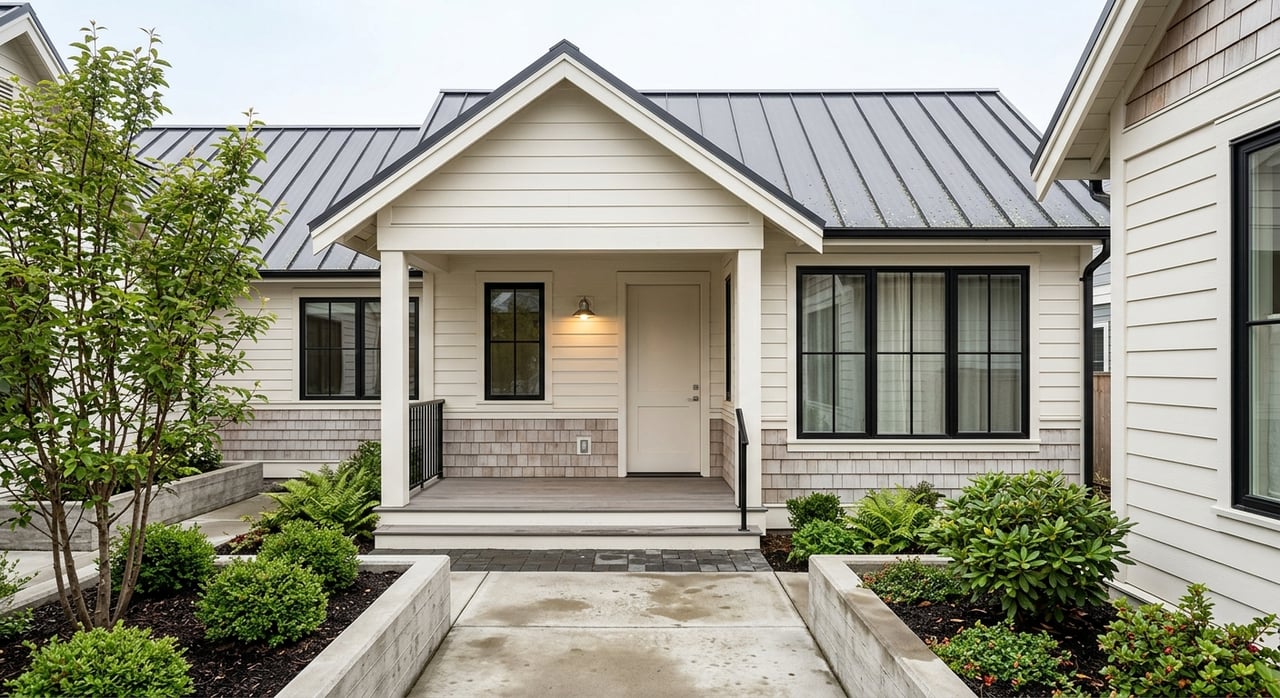
Townhome-style homes can also work well, but there is an important distinction. In Washington, a townhome-style property may be organized as a condominium, cooperative, plat community, or another type of common-interest community. That means the way a home looks does not automatically tell you who maintains the roof, siding, landscaping, or other exterior elements.
That legal structure matters. Under Washington law, the default rule is that the association maintains, repairs, and replaces common elements while each owner maintains the unit, unless the declaration says otherwise. So if you are looking at a condo or townhome-style property on Whidbey, the real question is not just “Does this feel low-maintenance?” but “What does the association actually maintain?”
Smaller single-family homes
A smaller detached home can still fit a lock-and-leave lifestyle, especially if the lot is compact and the exterior is simple. For some buyers, this option offers more privacy and fewer community rules while still keeping upkeep manageable.
On Whidbey Island, though, house size is only part of the story. Island County notes that many residents rely on septic systems and groundwater. That means even a modest single-family home may come with ongoing responsibilities outside the four walls of the house.
What “low-maintenance” really means
Low-maintenance does not mean no maintenance. It means understanding which tasks are shared, which remain your responsibility, and how predictable the ongoing costs really are.
In a well-run common-interest community, the structural advantage is clear. Shared maintenance can make it easier to travel without worrying as much about landscaping, exterior repairs, or certain building components. But you still need to know exactly where the association’s role ends and yours begins.
Boards may also set extra maintenance requirements for components that pose higher risk. So even in a community that feels hands-off, there may be rules or owner obligations that affect your plans. That is why document review is such a big part of finding the right fit.
Questions to ask before you buy
If you are comparing lock-and-leave options on Whidbey Island, these questions can quickly separate a truly easy-care property from one that only looks that way online.
Ask who maintains what
Start with the basics:
- Who handles the roof?
- Who handles siding?
- Who handles windows?
- Who handles exterior painting?
- Who handles landscaping?
- Who handles shared drives, parking areas, or common spaces?
Do not assume the answer based on property style alone. The declaration and community documents tell the real story.
Ask what dues actually cover
Monthly dues may support routine operations, common-area maintenance, and reserve contributions, but the details vary by community. Washington law requires annual budgets that disclose reserve contributions and whether the association has a reserve study.
That makes dues more than a line item. They are part of how you gauge whether a property is set up for predictable ownership or whether future costs may be waiting around the corner.
Ask about reserves and special assessments
A low-maintenance lifestyle is easier when major repairs are planned for. Reserve studies generally must be updated annually, with a professional visual update at least every third year.
For resale purchases, the association’s resale certificate must disclose current assessments, delinquent assessments, unpaid special assessments, and certain transfer restrictions. Before you buy, you want a clear sense of both the monthly cost and any larger expenses that may be approaching.
Ask about rules that affect daily use
Association rules are not just paperwork. They shape how easy the home will be to live in and leave behind.
Under Washington law, boards must provide notice before adopting, amending, or repealing a rule, and the rules must be reasonable. If the declaration allows it, the association may also adopt design and aesthetic standards. For buyers, that makes it smart to ask about:
- Rentals
- Pets
- Parking
- Storage
- Exterior changes
- Seasonal-use expectations
If you plan to use the property part-time, these details matter just as much as the floor plan.
Whidbey-specific upkeep you should not overlook
Island living comes with its own systems, and those systems can shape whether a home feels easy to own over time. This is where local due diligence matters most.
Septic systems can change the equation
Island County says about 72% of residents use septic systems. The county also notes that a typical septic tank should be pumped every 3 to 5 years, and all systems are inspected at the time of sale if the most recent compliance-period inspection is missing.
That means a detached home may still involve regular service and monitoring even if the house itself is small and updated. On Whidbey, low-maintenance does not always mean low-responsibility.
Water source matters too
A home’s water setup can affect both convenience and long-term planning. The county explains that wells serving two or more residential units on separate parcels are public water system wells that must be inspected and approved by county public health.
The county also notes that well sites require sanitary-control setbacks, including a 100-foot control radius. As a buyer, you should confirm whether the property is served by city water, a community system, a shared well, or an individual well, and who is responsible for testing, upkeep, and repairs.
Documents worth reviewing before closing
If a property is marketed as easy-care or low-maintenance, the paperwork should support that claim. Washington law requires associations to retain key records, including current budgets, meeting minutes, governing documents, rules, and financial statements.
For a resale purchase, one of the most important documents is the resale certificate. For new construction in a common-interest community, the public offering statement is the key source for information about the declarant, management company, and community type.
A solid review often includes:
- Declaration
- Bylaws
- Rules
- Budget
- Reserve study
- Board and owner meeting minutes
- Resale certificate for a resale purchase
- Public offering statement for qualifying new construction
These documents can help you understand whether the property matches your lifestyle, budget, and maintenance expectations.
Where to focus on Whidbey
For many buyers, lock-and-leave living is easiest to picture in Whidbey’s town-centered areas. Langley offers village-scale convenience and coastal charm. Freeland serves as South Whidbey’s commercial hub. Coupeville, Oak Harbor, and Clinton each offer their own practical advantages depending on how often you travel and what kind of day-to-day access you want.
The best fit often comes down to how you plan to use the home. If you want a second home with easy arrivals and departures, proximity to services and ferry routes may matter more than lot size. If you want a detached home with fewer shared rules, system simplicity becomes even more important.
The right fit is about clarity
Lock-and-leave living on Whidbey Island is absolutely possible, but the best choices are the ones that are clear on paper and practical in real life. A condo or townhome-style property may offer the easiest path if the association handles major exterior maintenance and has strong financial planning. A smaller single-family home can also work well if the lot, septic, and water setup are straightforward and manageable.
The goal is not just to find a beautiful island home. It is to find one that supports the way you actually want to live, travel, and return. If you want local guidance on comparing low-maintenance options, reach out to Amy Gulden to start your island story.
FAQs
What does lock-and-leave living mean on Whidbey Island?
- It usually means choosing a home with fewer day-to-day upkeep demands, but on Whidbey you still need to understand ferry access, shared maintenance, and property systems like septic or wells.
Are condos on Whidbey Island lower maintenance than single-family homes?
- Often yes, because associations commonly maintain common elements, but you should review the declaration and community documents to confirm exactly what is covered.
Do townhome-style homes on Whidbey Island always include exterior maintenance?
- No. In Washington, a townhome-style property may be organized under different legal structures, so the architecture alone does not tell you what the association maintains.
What should buyers ask a Whidbey Island HOA or condo association?
- Ask who maintains the roof, siding, windows, landscaping, and exterior painting, what dues cover, whether there is a current reserve study, and whether there are rules on rentals, pets, parking, storage, or exterior changes.
How common are septic systems on Whidbey Island homes?
- Island County says about 72% of residents use septic systems, so septic inspections, pumping schedules, and ongoing maintenance are important parts of due diligence.
What water questions should buyers ask on Whidbey Island?
- Ask whether the property is on city water, a community system, a shared well, or an individual well, and confirm who handles testing, maintenance, and repairs.
What documents should buyers review for a low-maintenance home in Washington?
- Key documents may include the declaration, bylaws, rules, budget, reserve study, meeting minutes, and resale certificate for a resale purchase, or the public offering statement for qualifying new construction.