Thinking about a Whidbey Island home that runs on a private well and septic system? You’re not alone. A large share of Island County residents rely on on-site systems, so these features are common and manageable when you know what to look for. In this guide, you’ll learn how septic and wells work, what inspections and tests to order, island-specific risks to watch, and a key 2027 rule change that affects time-of-sale inspections. Let’s dive in.
Why septic and wells are common on Whidbey
Much of Whidbey Island is not served by public sewer, and private water wells are typical outside town centers. Island County estimates roughly 72% of residents use on-site septic systems, so you should expect to evaluate these during due diligence when you buy a home here. You can review county program details, maintenance schedules, and homeowner resources on the Island County onsite sewage page.
Septic system basics on Whidbey
Common system types
You will most often see three categories:
- Gravity systems. A septic tank flows by gravity to a drainfield.
- Pressure or pump systems. A pump doses effluent to the drainfield.
- Alternative or proprietary systems. Examples include mounds, aerobic treatment units (ATUs), and systems such as Glendon. These often have specialized inspection and maintenance requirements.
If you are unsure what a listing has, ask for the as-built (record drawing) and permit number. The county’s onsite sewage program page lists system types, O&M schedules, and homeowner training options.
Inspection schedules and time of sale
Washington’s on-site sewage rules set operation and maintenance requirements. In general, gravity systems are evaluated at least every three years, while systems with pumps, pressure distribution, or proprietary components are checked annually, or more often if required by the local health officer. At property transfer, the owner must provide maintenance and repair records, and obtain a property-transfer inspection if a recent evaluation is not on file. A notable change takes effect on February 1, 2027, when the rule begins requiring a third-party property-transfer inspection authorized by the local health officer, with limited local waivers possible. You can read the requirements in WAC 246-272A-0270.
What an inspection includes
A typical septic O&M or property-transfer inspection on Whidbey includes:
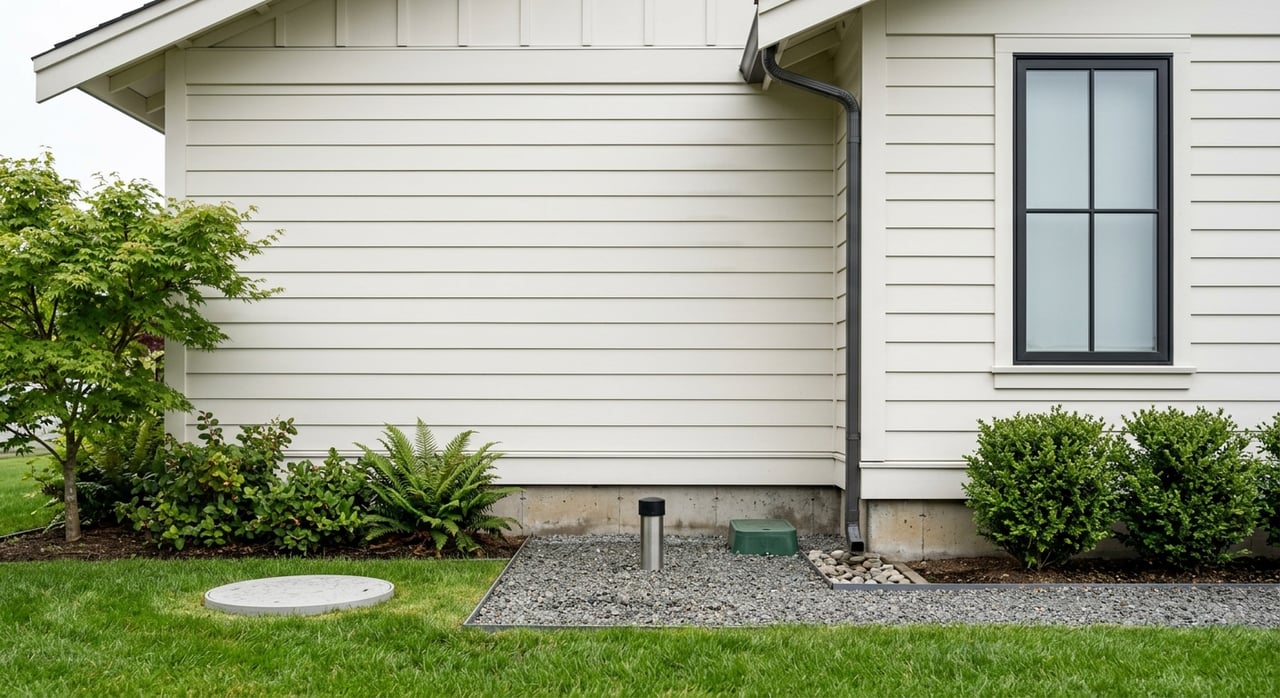
- Locating tank lids and the drainfield using record drawings and on-site probing.
- Measuring scum and sludge levels, and inspecting baffles and any effluent filter.
- Testing mechanical parts such as pumps, floats, alarms, and control panels.
- Walking the drainfield to look for ponding, odors, or unusually lush vegetation.
- Reviewing permits, past records, and pump-out history, then preparing a report.
Island County publishes example inspection forms and notes that inspection fees on-island often run in the low hundreds, depending on access and system complexity. The EPA’s SepticSmart tips are also a useful homeowner checklist.
Warning signs of failure
Watch for these red flags:
- Sewage odors outdoors or backups inside the home.
- Persistently wet or spongy ground over the drainfield.
- Slow drains, gurgling plumbing, or frequent alarm trips.
- Unusually green vegetation on the dispersal area.
If you suspect a problem, review Island County’s definition of failure and next steps, including contacts for repairs and permits.
Lifespan and costs
Tanks and controls can last for decades with proper maintenance. Drainfields are more sensitive to overloading and may need repair or replacement sooner. Costs vary widely by site, access, and design. Minor repairs can be several thousand dollars, while full replacements can reach into the tens of thousands. Ask local, licensed providers for written estimates and review county inspection forms for context on scope and components.
Private well basics on Whidbey
Find the well record
Start with the well completion report, also called the well log. It lists depth, casing, static water level, and screened interval. Request the well tag or log from the seller and look up records with Island County’s Groundwater Data and Hydrogeology Dashboard.
Water tests to order
For private wells in Washington, the Department of Health recommends at least annual testing for:
- Coliform bacteria, including E. coli.
- Nitrate.
Depending on local geology or history, consider arsenic, manganese or iron, and chloride or conductivity if you are near the shore and want to screen for saltwater intrusion. Use a DOH-certified laboratory and follow their sampling instructions.
When to request a pump-flow test
If past yield data is unclear, or if you plan high water use, a licensed well professional can run a pump-flow test to measure gallons per minute, drawdown, and recovery. Many households function well at sustained flows around 3 to 5 GPM, but your needs may vary. Discuss expectations with your inspector and review the well log when deciding.
Island-specific risks to consider
- Seawater intrusion. Some coastal or near-shore areas show risk for saltwater intrusion, especially where groundwater levels are low or pumping is concentrated. Review chloride and seawater-intrusion mapping on the county’s Hydrogeology Dashboard and consider testing for chloride or conductivity if you are close to the shoreline.
- PFAS or localized contaminants. Island County and DOH issue advisories when contamination is identified. Ask for recent water-quality results and check county resources for updates.
Buyer due-diligence checklist
Use this checklist to structure your contingencies and timelines:
Records request
- Ask the seller for the septic permit and as-built, O&M inspection records, pump-out receipts, and any repair permits or proprietary system manuals. Washington’s seller disclosure law requires available O&M records to be made available at transfer. Review RCW 64.06 for the disclosure framework.
Septic inspection at time of sale
- If there is no recent inspection on file, order a property-transfer O&M inspection. Follow state rule timing and note the upcoming February 1, 2027 requirement for a third-party inspection authorized by the local health officer. See WAC 246-272A-0270 for details.
Consider a pump-out
- If pump-out history is unknown or overdue, add a pump-out before or during inspection so the inspector can view tank internals. The Island County FAQ covers pumping frequency basics, and the EPA’s SepticSmart page outlines simple do’s and don’ts.
Well paperwork and basic testing
- Obtain the well log and any recent lab results. Order at least coliform/E. coli and nitrate tests from a DOH-certified lab. If the property is near the shore or past results suggest it, add chloride or conductivity, and consider arsenic based on local conditions. Follow DOH sampling guidance.
Pump-flow (yield) test if quantity is a concern
- If you see low historic yields or plan higher demand, have a licensed well professional perform a pump test and provide a written report.
Check local hydrogeology and maps
- Use Island County’s Groundwater Data and Hydrogeology Dashboard to review well logs, seawater-intrusion zones, and any local monitoring alerts that may affect the property.
Ask these specific questions
- Can you provide the septic as-built, permit number, O&M reports, and the last pump-out receipt?
- What is the septic tank size, number of compartments, presence of risers, and date of last pump-out or major repair?
- Is the system proprietary, such as an ATU, mound, or Glendon? If so, can you share the O&M manual and authorized maintenance providers?
- What is the well tag or ID, depth, static water level, pump horsepower, and most recent water-quality test results?
- Has the county identified this parcel near a seawater-intrusion risk area or other monitoring concern on the Hydrogeology Dashboard?
Timeline and cost planning
- Schedule septic inspections and pump-outs early. Providers can book out during peak seasons.
- Bacteria test results often return within 24 to 72 hours after the lab receives samples. Chemical panels may take longer.
- Inspection fees on-island often run in the low hundreds, but pump-outs and pump-flow tests vary by tank size, site access, and travel. Island County’s inspection forms and program documents provide examples of scope that can inform estimates. Get quotes in writing.
Local resources you can trust
- Review Island County’s septic program overview, including maintenance schedules and homeowner training.
- Read WAC 246-272A-0270 for operation, maintenance, and the February 1, 2027 third-party inspection requirement.
- See Island County’s example inspection forms and program documents for what inspectors check and typical cost context.
- Learn the signs of failure and repair steps on Island County’s failures page.
- Use the Groundwater Data and Hydrogeology Dashboard for well logs, chloride monitoring, and seawater-intrusion mapping.
- Follow DOH guidance on private well testing and certified labs.
- Get homeowner tips from EPA’s SepticSmart.
Links for the resources above:
- Island County Onsite Sewage Program: https://www.islandcountywa.gov/190/Onsite-Sewage-Septic-Systems
- WAC 246-272A-0270: https://regulations.justia.com/states/washington/title-246/sewer-systems/chapter-246-272a/specific-requirements/section-246-272a-0270/
- Island County Inspection Forms and Program Docs: https://www.islandcountywa.gov/DocumentCenter/View/11084
- Island County Septic Failures: https://www.islandcountywa.gov/677/Failures
- Island County Groundwater Data and Hydrogeology Dashboard: https://www.islandcountywa.gov/660/Groundwater-Data
- Washington DOH Testing Your Water: https://doh.wa.gov/community-and-environment/drinking-water/contaminants/testing-your-water
- EPA SepticSmart: https://www.epa.gov/septic/septicsmart
- Washington Seller Disclosure RCW 64.06: https://app.leg.wa.gov/rcw/default.aspx?cite=64.06&full=true
Buying on an island is about loving the landscape and understanding how homes work with it. With the right inspections, records, and local knowledge, a septic system and private well can serve you well for years. If you would like help structuring contingencies, reading records, or prioritizing tests, connect with us. Start your island story. Schedule a consultation with Amy Gulden.
FAQs
What should Whidbey buyers test for in a private well?
- Order coliform bacteria (including E. coli) and nitrate at a minimum, and consider arsenic or chloride based on local geology or proximity to shore per Washington DOH guidance.
How often are septic inspections required in Island County?
- Gravity systems are typically evaluated at least every three years, while systems with pumps or proprietary components are checked annually, following WAC 246-272A and local health officer requirements.
What changes on February 1, 2027 for septic sales?
- The state rule begins requiring a third-party property-transfer inspection authorized by the local health officer, with limited local waivers; sellers must also provide available O&M records.
What are signs a septic drainfield may be failing?
- Persistent wet spots, sewage odors, slow drains or gurgling, unusually lush vegetation over the drainfield, or backups inside the home should be evaluated promptly.
How can I check a Whidbey property for seawater intrusion risk?
- Review Island County’s Groundwater Data and Hydrogeology Dashboard for chloride monitoring and seawater-intrusion mapping, and consider testing for chloride or conductivity if near the shore.